
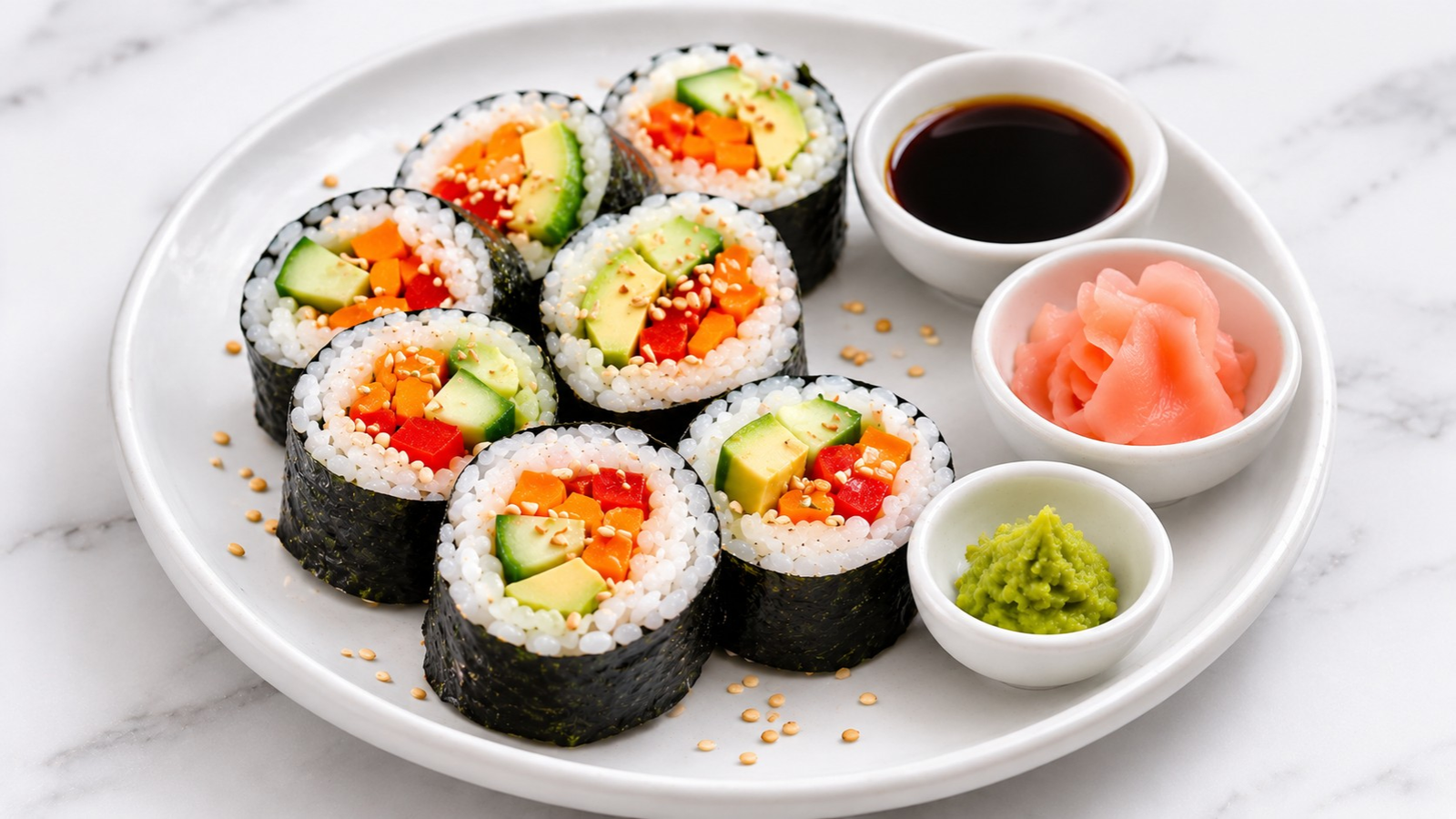
Who needs a restaurant when you can turn your dining room into a little J-drama scene? 😂❤️ For our date night at my place, I wanted to give my boyfriend a surprise he wouldn’t expect.
He loves Japanese culture, food, and traditions, so I thought I’d dress up in a Japan-inspired outfit and prepare something special.
My first thought was to order food from the market, but then I said to myself, why not make it with my own hands? I had tried plenty of recipes before, but sushi rolls were completely new territory for me!
I gathered all the ingredients and got to work, hoping my sushi-making skills would impress him as much as my outfit.
When he arrived, I served him the homemade Vegetarian Sushi Rolls, and his happy reaction made all the effort worth it.
We enjoyed our food at the dining table and then settled in to watch J-dramas together. Honestly, it felt like our own little drama episode, minus the dramatic soundtrack! 😂
If you love J-dramas, enjoy trying new foods, or want to surprise someone special, these Vegetarian Sushi Rolls are a fun recipe to make at home!
Why These Rolls Make a Great Meal
- Light but Satisfying: A tasty option when you want something filling without a heavy meal.
- Perfect for Sharing: Slice the rolls into small pieces and serve them on a platter.
- Good for Different Occasions: Enjoy them for lunch, dinner, snacks, or as a party appetizer.
- Restaurant-Style at Home: Enjoy homemade sushi without having to visit a restaurant.
- Make Ahead Friendly: Prepare the rolls a little before serving and keep them covered in the refrigerator.
The Fun Part of Making Sushi at Home
Making sushi at home is a little different from preparing your usual meals. You get to spread the rice, arrange the filling, and roll everything into one neat piece.
Don’t worry if your first few rolls aren’t perfectly shaped! With a little practice, you’ll get better at rolling and slicing them.
And honestly, seeing your homemade sushi pieces lined up on a plate is quite satisfying!
The Ingredients Behind the Recipe
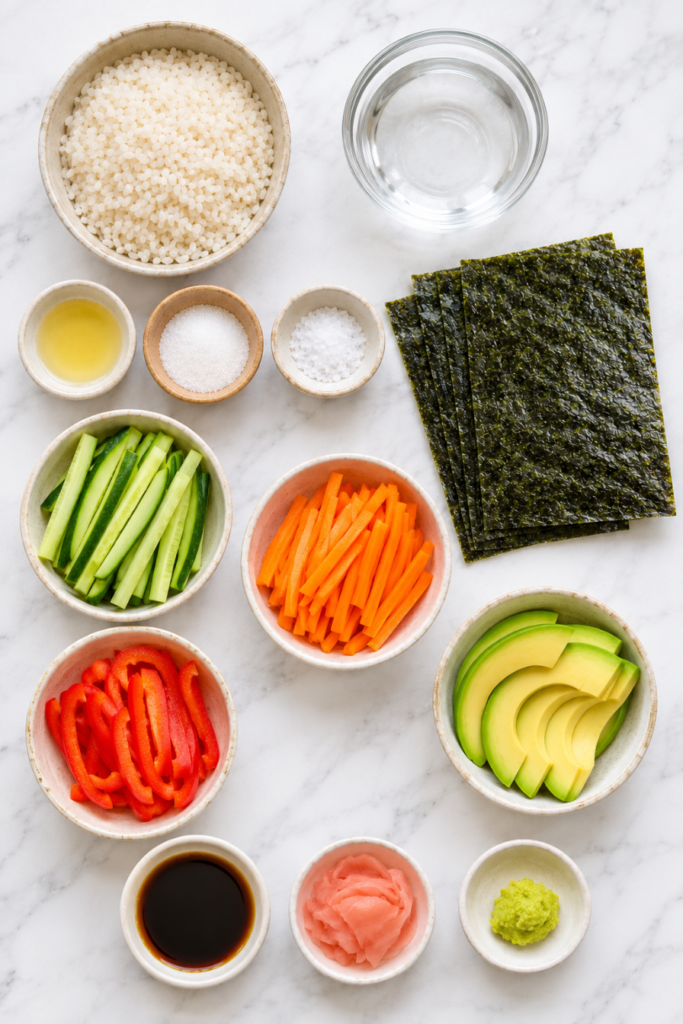
- Japanese Short-Grain Rice: This rice has the right amount of natural starch to help sushi rolls hold their shape. Look for rice labeled specifically for sushi.
- Nori Sheets: Dried seaweed sheets provide the outer layer of the rolls. Choose fresh, crisp sheets that are easy to handle.
- Cucumber: Adds a refreshing crunch to the filling. English cucumbers are a good choice because they contain fewer seeds.
- Carrots: Provide natural sweetness and a little extra crunch. Choose firm, fresh carrots and cut them into thin strips.
- Avocado: Adds creaminess to the vegetable filling. Choose an avocado that yields slightly when pressed but is not overly soft.
- Rice Vinegar: Gives the sushi rice its familiar mild tang. Seasoned rice vinegar can also be used, but adjust the added sugar and salt to avoid over-seasoning.
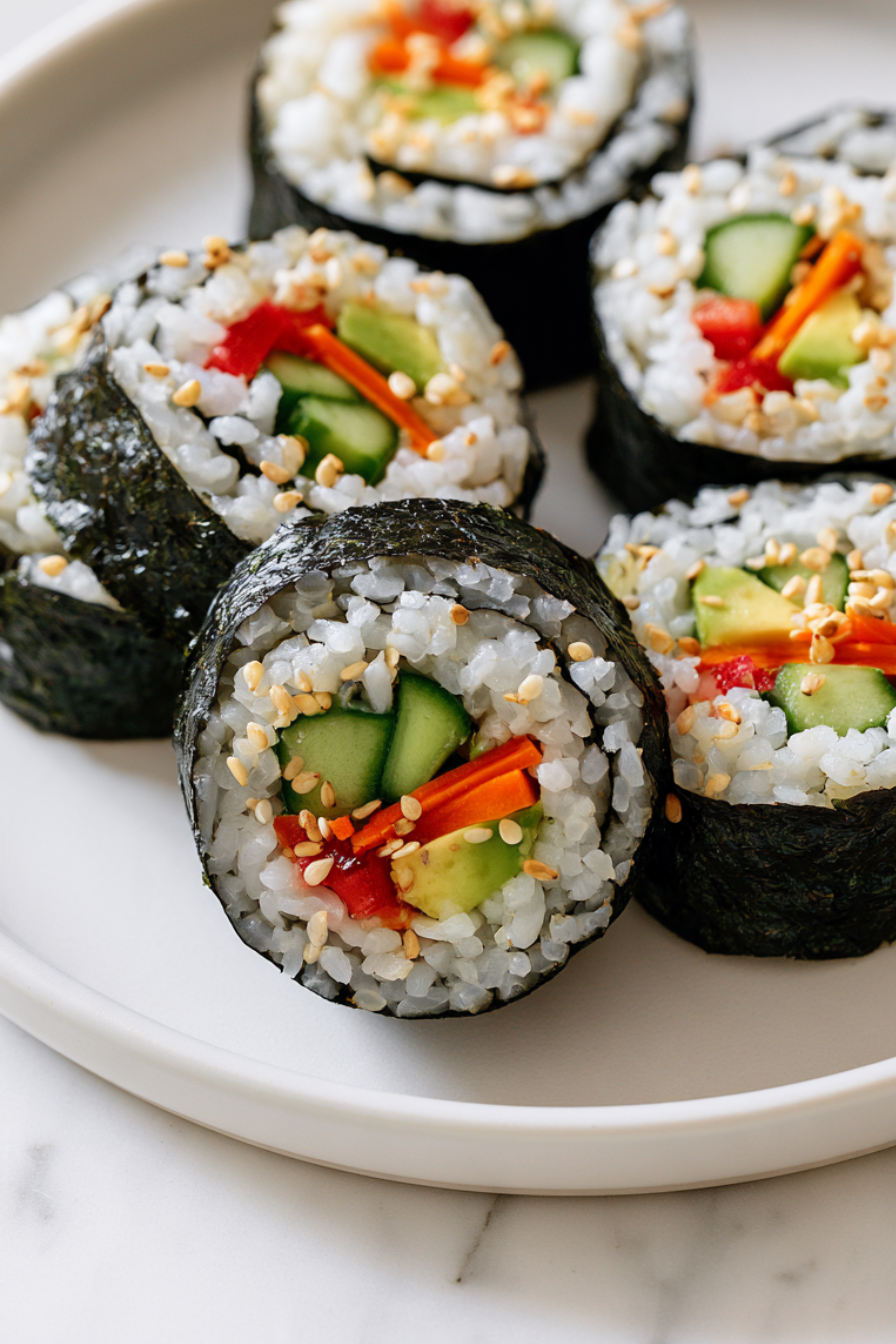
Vegetarian Sushi Rolls Recipe
Ingredients
Equipment
Method
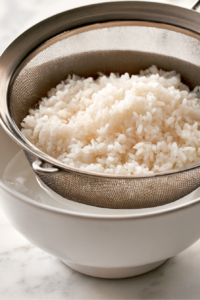
- Rinse the sushi rice under cold running water until the water becomes mostly clear. Drain well to remove excess water. This helps remove extra starch and keeps the cooked rice from becoming too sticky.

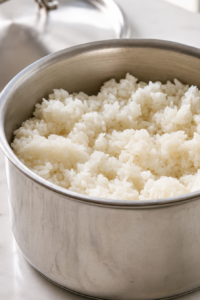
- Add the rinsed rice and water to a medium saucepan. Bring it to a boil, then reduce the heat to low. Cover and cook for 12–15 minutes, or until the water has been absorbed and the rice is tender. Remove the saucepan from the heat and let the rice rest, covered, for 10 minutes.
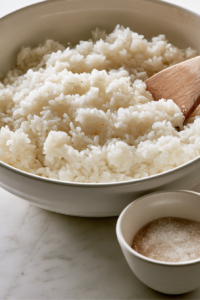
- In a small bowl, mix the rice vinegar, sugar, and salt until dissolved. Transfer the cooked rice to a large bowl and gently fold in the vinegar mixture using a rice paddle or wooden spoon. Allow the rice to cool to room temperature before assembling the rolls.
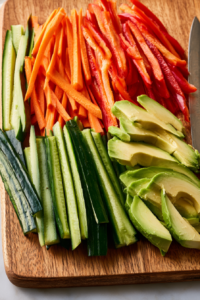
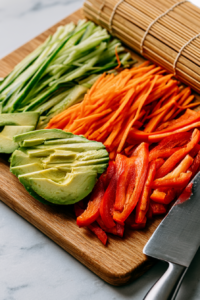
- Wash and prepare the cucumber, carrot, avocado, and red bell pepper. Cut them into thin, even strips so they fit neatly inside the sushi rolls.
- Keep the avocado slices slightly thicker to give the rolls a creamy texture. Arrange all the prepared vegetables near your rolling station for easy assembly.
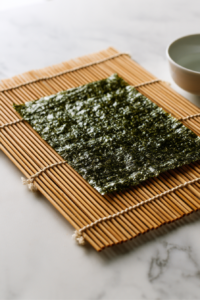
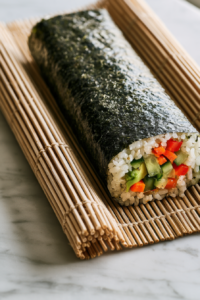
- Place a bamboo sushi mat on a clean work surface. Lay one sheet of nori on the mat with its shiny side facing down and the rough side facing up.
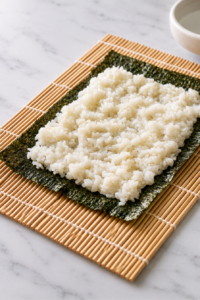
- Wet your fingers with a little water to prevent the rice from sticking. Spread about one-quarter of the prepared sushi rice evenly over the nori, leaving a small border along the top edge.
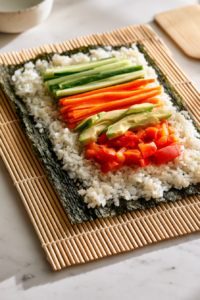
- Arrange a few strips of cucumber, carrot, avocado, and red bell pepper horizontally across the center of the rice. Avoid adding too much filling, as this can make the rolls difficult to close.
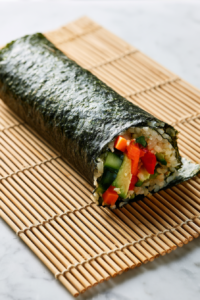
- Lift the edge of the bamboo mat closest to you and begin rolling the nori over the filling. Use your fingers to keep the vegetables in place while gently tucking the roll inward.
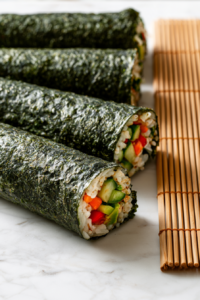
- Continue rolling forward, applying gentle and even pressure with the bamboo mat until the sushi roll is completely sealed. Lightly press along the roll to help it hold its shape.
- Repeat the process with the remaining nori sheets, rice, and vegetables.
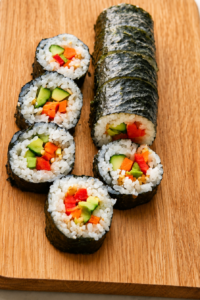
- Use a sharp knife to cut each sushi roll into 6–8 even pieces. Wipe the knife with a damp cloth between cuts to keep the slices clean and prevent the rice from sticking.
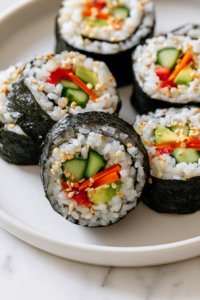
- Arrange the vegetarian sushi pieces on a serving plate. Sprinkle with toasted sesame seeds if desired and serve with soy sauce, pickled ginger, and wasabi.
Nutrition Information
| Nutrient | Amount |
|---|---|
| Calories | 280 kcal |
| Carbohydrates | 49 g |
| Protein | 6 g |
| Fat | 7 g |
| Fiber | 5 g |
| Sugar | 5 g |
| Sodium | 390 mg |
How to Get Neat Sushi Rolls
- Using Too Much Rice: A thick rice layer makes the rolls bulky and harder to close. Spread the rice in a thin, even layer.
- Cutting Vegetables Unevenly: Large or irregular pieces can make the filling difficult to distribute. Keep the vegetable strips similar in size.
- Rolling Too Loosely: Loose rolls can fall apart when sliced. Apply steady pressure with the bamboo mat as you roll.
- Using a Dull Knife: A dull blade can squash the rice and tear the nori. Use a sharp knife for cleaner cuts.
- Handling Nori With Wet Hands: Excess moisture can make seaweed difficult to work with. Wet your fingers lightly when handling the rice, rather than soaking the nori.
- Cutting With Too Much Pressure: Pressing down hard can flatten the rolls. Use a gentle forward-and-back slicing motion instead.
Delicious Ways to Customize Your Sushi Rolls
- Cream Cheese Rolls: Add a thin strip of cream cheese for a richer filling.
- Spicy Avocado Rolls: Mix a little sriracha with mashed avocado before adding it to the rice.
- Mango Sushi Rolls: Include thin mango slices for a naturally sweet variation.
- Tofu Sushi Rolls: Add baked or pan-seared tofu strips for extra plant-based protein.
- Sweet Potato Rolls: Use roasted sweet potato strips for a slightly sweet and hearty filling.
- Sesame Vegetable Rolls: Add extra toasted sesame seeds to the filling for a nutty taste.
Your Next Recipe Ideas
- Vegetable Dumplings Recipe
- Creamy Tuscan Butter Beans Recipe
- Homemade Margherita Pizza Recipe
- Spinach and Ricotta Stuffed Shells Recipe
- Avocado Toast With Cherry Tomatoes Recipe
How to Keep Sushi Fresh for Later
- Refrigerator Storage: Place leftover sushi rolls in an airtight container and refrigerate promptly. For the best quality and food safety, consume them within 24 hours.
- Separate the Dipping Sauces: Keep soy sauce, wasabi, and other dipping sauces in separate containers to prevent the rolls from becoming soggy.
- Store Uncut Rolls: If possible, refrigerate whole rolls rather than sliced pieces. This helps reduce exposed surfaces and moisture loss.
- Avoid Freezing: Freezing is not recommended because the rice and fresh vegetables can lose their original texture after thawing.
- Follow Food Safety Guidelines: Do not leave cooked sushi rice or assembled rolls at room temperature for more than two hours. Refrigerate leftovers promptly and discard anything left out longer.
Frequently Asked Questions
- Can I make vegetarian sushi rolls without a bamboo mat?
Yes! You can use a clean kitchen towel covered with plastic wrap instead. Place the nori and rice on top, add the filling, and gently roll everything together. A bamboo mat makes the process easier, but it isn’t essential. - What can I serve with vegetarian sushi rolls?
Vegetarian sushi rolls go well with soy sauce, pickled ginger, and wasabi. You can also serve them with miso soup or a simple Asian-style salad. These sides make the meal more complete without taking too much time to prepare. - Why is my sushi rice too sticky to handle?
Sushi rice is naturally sticky, but it can become difficult to handle if it is too wet or warm. Let the cooked rice cool slightly before using it. Keep a small bowl of water nearby to moisten your fingers while spreading the rice. - Can I use regular white rice instead of sushi rice?
Sushi rice is the best choice because its short grains help the rolls hold together. Regular long-grain rice usually does not have enough stickiness for rolling. If possible, choose Japanese short-grain rice for the best results. - How do I keep the nori sheets from tearing while rolling?
Handle the nori sheets gently and avoid adding too much moisture. Spread the rice in an even layer, leaving a small strip of nori uncovered at the top. Roll slowly and apply gentle, even pressure with your bamboo mat.