
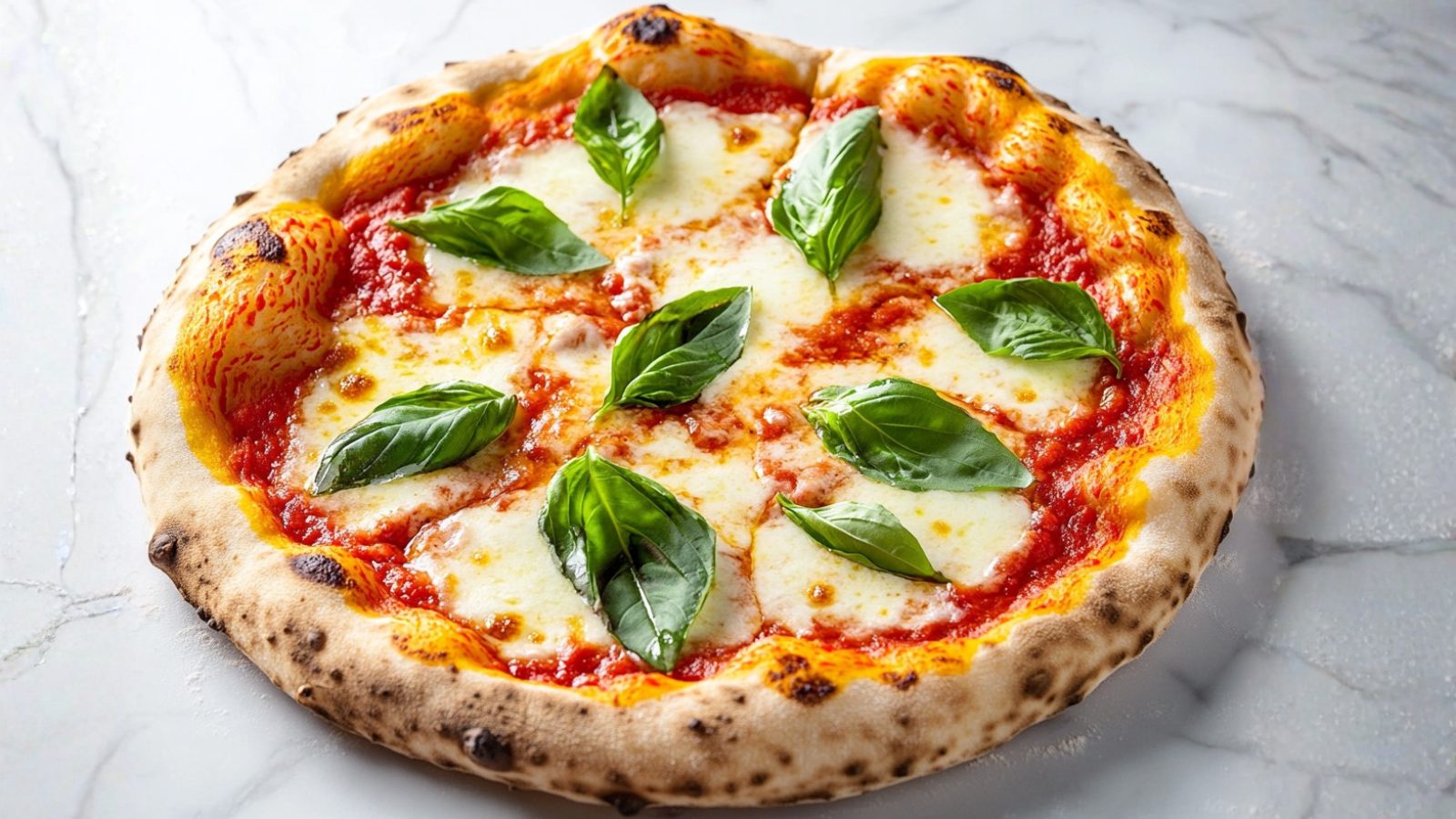
For our last date night, I decided to surprise my partner with homemade Margherita pizza instead of ordering takeout.
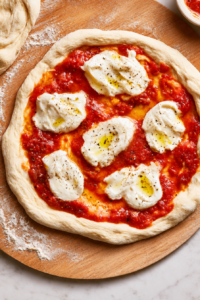
While preparing the pizzas, we had fun arranging the mozzarella and basil and deciding who could make the better-looking pizza. Of course, I was pretty confident mine would win!
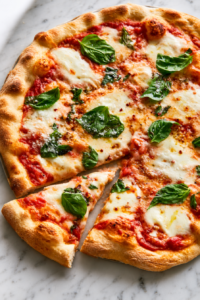
When the pizzas came out of the oven, the golden crust, melted mozzarella, and fresh basil smelled amazing.
We poured our favorite drinks, settled down with warm slices, and enjoyed a relaxed dinner at home. ❤️
This Homemade Margherita Pizza recipe has everything I love about a good pizza: a crispy crust, creamy mozzarella, tangy tomato sauce, and fresh basil.
It’s simple to prepare, fun to make together, and perfect for a dinner with your special someone.
Why This Pizza Deserves a Spot on Your Menu
This pizza is easy to fit into your dinner plans. You can prepare the dough ahead of time, keep the toppings simple, or let everyone add their favorite extras.
Making two medium pizzas also gives you the option to try different toppings without preparing a separate meal.
It’s satisfying, easy to customize, and a good reason to skip takeout now and then.
Ingredients for Homemade Margherita Pizza
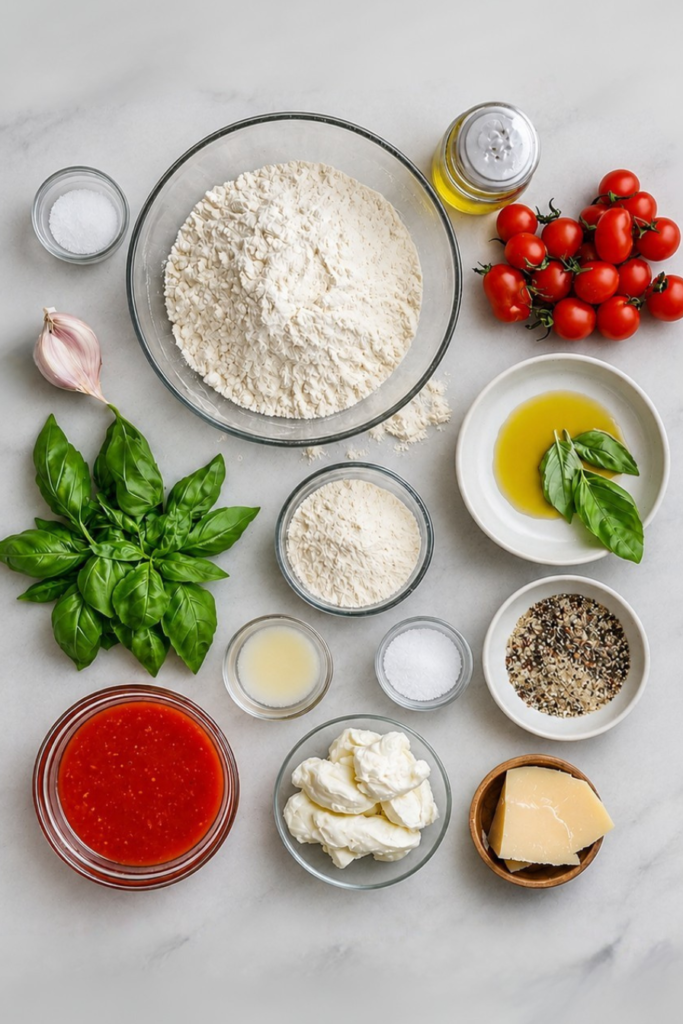
You will need basic pantry ingredients for the dough and sauce, along with fresh mozzarella and basil for the toppings.
Bread flour can produce a chewier crust, while all-purpose flour works well for a softer, tender base. Fresh mozzarella gives the pizza its creamy texture, but it should be drained thoroughly before baking.
If fresh mozzarella is unavailable, use a low-moisture mozzarella designed for pizza.
You can also skip the optional Parmesan for a simpler topping or leave out the red pepper flakes if you prefer a mild flavor.
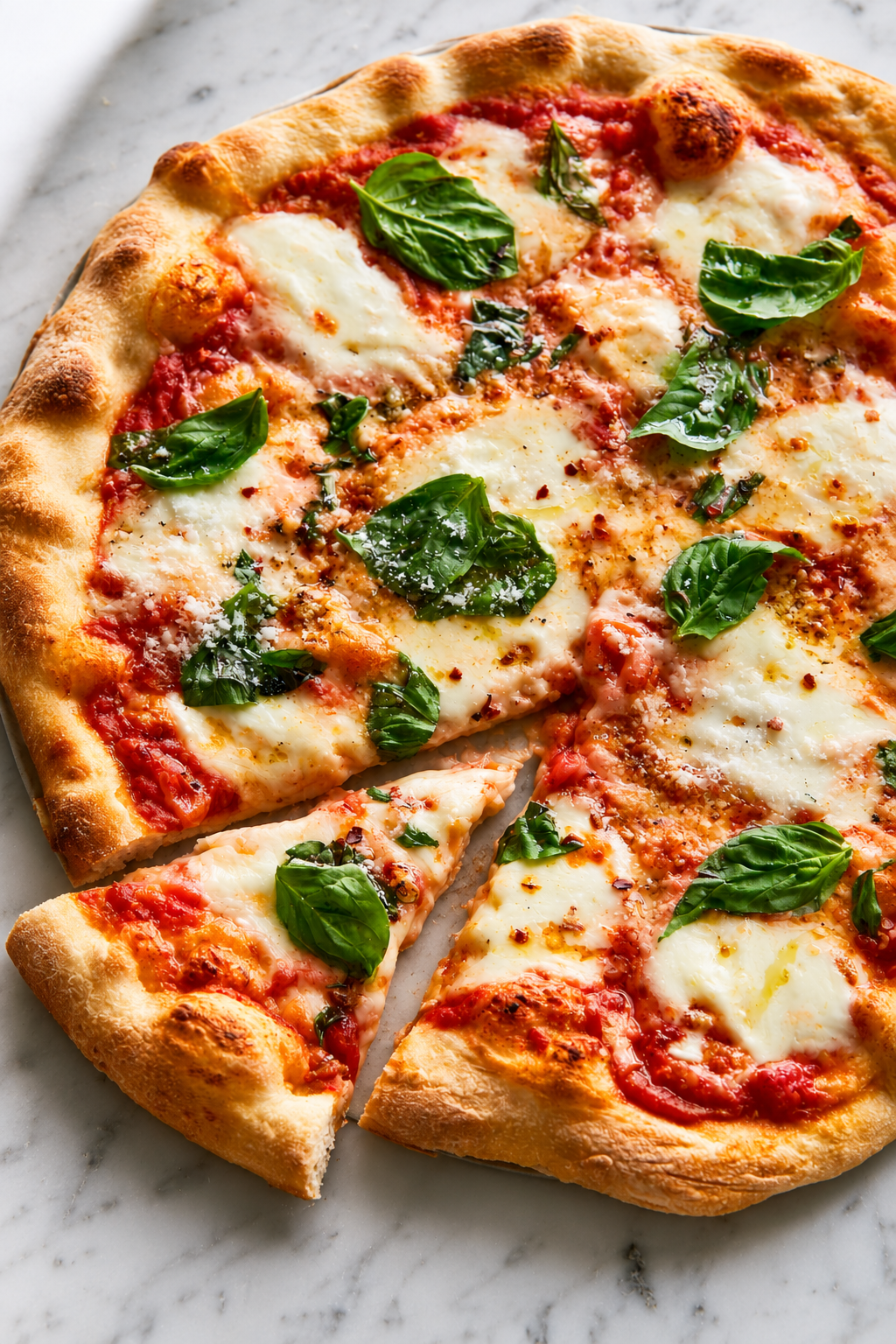
Homemade Margherita Pizza
Ingredients
Equipment
Method
- Combine warm water, sugar, and instant yeast in a large mixing bowl. Stir gently and let it sit for about 5 minutes. Add flour, salt, and olive oil, then mix until a rough dough forms.

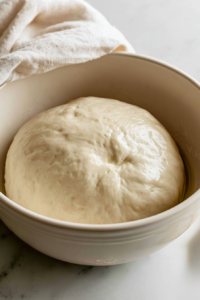
- Knead the dough for 8–10 minutes until smooth and elastic. Transfer it to a lightly oiled bowl, cover with a clean kitchen towel, and let it rise for 60–90 minutes until doubled in size.
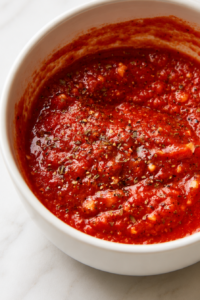
- Combine crushed tomatoes, olive oil, minced garlic, dried oregano, salt, and black pepper in a small bowl. Stir until evenly mixed, keeping the sauce uncooked for a fresh tomato flavor.
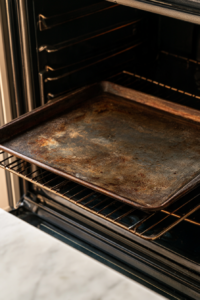
- Place a pizza stone or heavy baking sheet on the middle or upper-middle oven rack. Preheat the oven to 475–500°F (245–260°C) for at least 30 minutes to help create a crisp pizza crust.
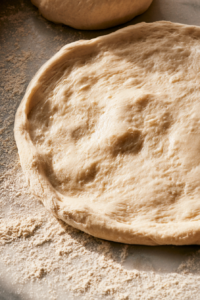
- Transfer the risen dough to a lightly floured surface and divide it into two equal portions. Shape each into a ball, then gently stretch into a 10–12-inch circle, leaving a slightly thicker edge around the crust.
- Place each pizza base on a lightly floured pizza peel or suitable baking parchment. Spread a thin layer of tomato sauce over the dough, arrange the fresh mozzarella slices evenly, and drizzle with olive oil.
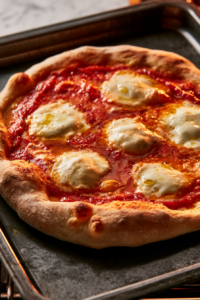
- Carefully transfer the pizza to the preheated stone or baking sheet. Bake for 8–12 minutes, until the crust turns golden, the mozzarella melts, and a few lightly browned spots appear around the edges.
- Remove the pizza from the oven and let it rest for 1–2 minutes. Scatter fresh basil over the melted cheese, add optional Parmesan or red pepper flakes, then slice and serve while warm.
Nutrition Information
- Calories: 320 kcal
- Protein: 14 g
- Carbohydrates: 42 g
- Total Fat: 10 g
- Saturated Fat: 4 g
- Fiber: 2 g
- Sugar: 3 g
- Sodium: 620 mg
- Cholesterol: 20 mg
Simple Ways to Improve Your Margherita Pizza
- Drain the mozzarella properly: Fresh mozzarella contains plenty of moisture. Pat the slices dry with paper towels before adding them to the dough to help prevent a soggy center.
- Measure the flour accurately: Weighing the flour gives more consistent results than measuring by volume. Too much flour can make the dough stiff and difficult to stretch.
- Avoid using too much sauce: A thin, even layer is enough. Excess sauce can make the center wet before the crust finishes cooking.
- Let the dough relax: If the dough keeps springing back, cover it and let it rest for a few minutes. This makes shaping easier and reduces the risk of tearing.
- Use parchment carefully: Parchment can make transferring pizza easier, but check its maximum temperature rating. Do not use it beyond the manufacturer’s stated limit.
- Adjust the seasoning at the end: Taste the sauce before spreading it. Since mozzarella and Parmesan already contribute salt, avoid over-seasoning the entire pizza.
Your Guide to a Relaxed Pizza Night
For a relaxed dinner with your partner, serve the pizza fresh from the oven with a simple arugula salad, cherry tomatoes, and a light olive oil dressing. The crisp greens balance the creamy cheese without making the meal feel too heavy.
A small antipasto platter with olives, roasted peppers, and marinated artichokes also works well. If you want something warm on the side, roasted zucchini or bell peppers are easy options.
Keep the table setting simple with plates, cloth napkins, and a small vase of fresh flowers if you have some nearby. Sparkling water with lemon or a homemade fruit drink makes a refreshing accompaniment. Finish with a small dessert, such as chocolate-covered strawberries or vanilla ice cream.
You can also make the evening more interactive by letting each person shape a pizza and choose a small variation. Keep the classic tomato, mozzarella, and basil combination as the starting point, then adjust the seasoning or add optional toppings to suit individual tastes.
How to Keep Leftover Pizza Tasting Good
Homemade Margherita pizza tastes best immediately after baking, but leftovers can be stored safely.
Refrigeration: Let leftover slices cool briefly, then place them in an airtight container and refrigerate within two hours of cooking. Store them for up to 3–4 days.
Freezing: For better texture, freeze cooled slices in a single layer until firm, then transfer them to a freezer-safe bag or container. Use within 1–2 months for the best quality. The crust may soften slightly after thawing.
Reheating in a skillet: Place a slice in a covered skillet over medium-low heat. Warm it for a few minutes until the base becomes crisp and the cheese melts. Add a few drops of water to the empty part of the pan and cover briefly if the cheese needs more help melting.
Reheating in the oven: Preheat the oven to 375°F (190°C). Place the slices on a baking sheet and heat for about 5–8 minutes, checking until the cheese is hot and the crust has crisped.
Avoid microwaving the pizza if you want to preserve its crisp base. It works in a pinch, but the crust will usually become softer.
If preparing the dough ahead, refrigerate it in a covered container for up to 24–48 hours. Bring it toward room temperature before shaping. Keep fresh basil separate until serving so it retains its color and aroma.
Frequently Asked Questions
- Can I make Margherita pizza without a pizza stone?
Yes. A heavy baking sheet works well as an alternative. Place it upside down in the oven while preheating so the surface becomes hot. Transfer the pizza carefully and bake until the base is crisp and the cheese has melted. - Can I prepare the pizza dough ahead of time?
Yes. Place the dough in a lightly oiled, covered container and refrigerate it for 24–48 hours. Let it warm slightly at room temperature before stretching. Cold dough is harder to shape and may shrink when handled. - Why is my homemade Margherita pizza soggy in the middle?
Excess moisture is usually the main reason. Drain and pat dry the mozzarella, use a thin layer of sauce, and preheat the baking surface thoroughly. Make sure the oven is hot enough before putting the pizza inside. - Can I use dried basil instead of fresh basil?
Fresh basil is the traditional choice because it provides a bright aroma and delicate flavor. If fresh basil is unavailable, a small amount of dried basil can work, although the taste will be different. Add it sparingly to avoid overpowering the tomato sauce. - Can I make this Margherita pizza vegetarian?
Yes. The recipe is vegetarian if the mozzarella and optional Parmesan are made with suitable vegetarian-friendly ingredients. Some cheeses use animal-derived rennet, so check the label if you avoid it. You can omit the Parmesan or use a vegetarian alternative if needed.